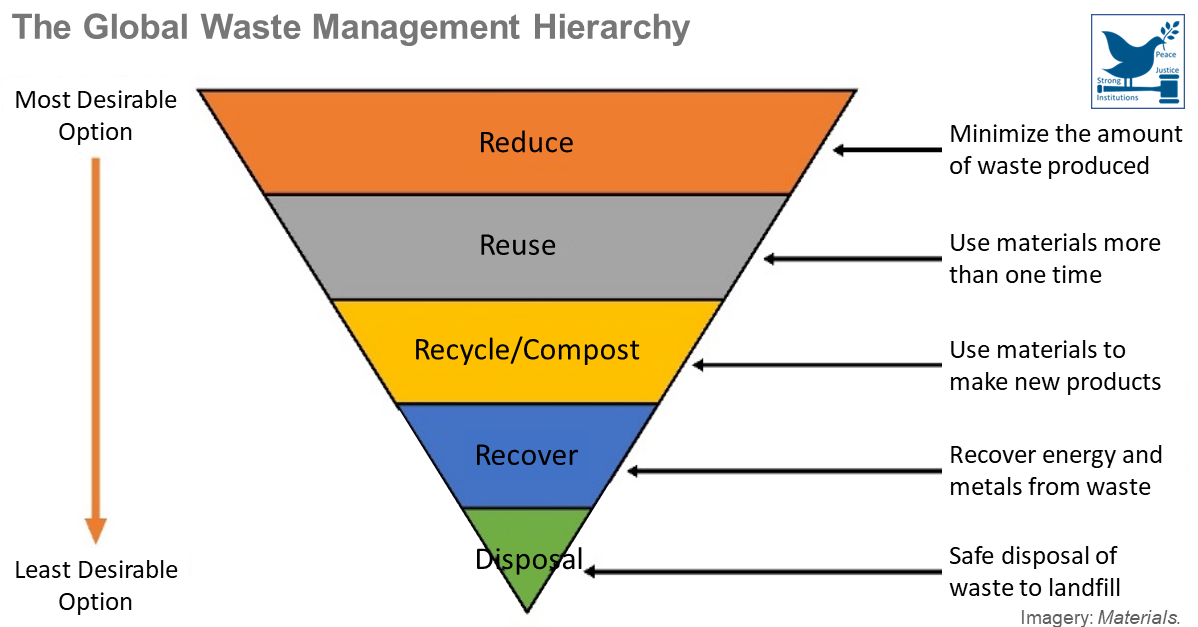
 The lack of a commonly accepted and sufficiently inclusive definition and circularity measurement methodology hampers the transition to a more circular economy in numerous ways. To counter this, this circular economy categorization system was proposed comprising 14 circular categories organized in four high-level groups and a set of minimum criteria. The 14 circular categories contribute to increasing resource efficiency and decreasing environmental impacts throughout project value chains. This can be achieved by applying or enabling one or more of the 9 circular economy "R" strategies or principles – the “9 R’s”: Refuse, Rethink, Reduce, Reuse, Repair, Refurbish, Remanufacture, Repurpose, and Recycle.
Hirsch, Peter, and Christian Schempp. "Categorisation System for the Circular Economy". European Commission. March 2020. https://op.europa.eu/...
Posted on 10/10/22
Recent Abstracts
Sustainability in the Hospitality Industry: A Social Factor Dimension
This paper empirically studies the impact of social factors on the sustainability of the hospitality industry in Qatar. Besides the social factors that influence the sustainability of any business, it shows that the most relevant factors for the sustainability of the local hospitality industry are education, life expe ...
Posted on 24/03/21
Innovative mechanism for local tourism system management: a case study
This paper studies an innovative mechanism for managing local tourism and recreation systems and offers recommendations on their development. It examines issues on local tourism system management in the Volga Federal District, Russia. It shows that the relevance of local system development is largely dictated by the lo ...
Posted on 24/03/21
OECD Tourism Papers
OECD Tourism papers address issues such as trends and policies, innovation, sustainability, skills and statistics. This series is designed to make available to a wider readership selected studies drawing on the work of the OECD Tourism Committee (www.oecd.org/cfe/tourism). It complements OECD tourism publications and ...
Posted on 24/03/21
EMEA Real Estate Market Outlook 2020
The report takes a comprehensive look at the prospects for the EMEA real estate market in 2020. It provides a cautious economic and political outlook in the region amidst weakening global trading conditions, the capital markets in light of the accommodative policies of central banks that reinforce expectation of conti ...
Posted on 24/03/21
 English
 Albanian
 Arabic
 Bosnian
 Chinese (Simplified)
 Croatian
 Czech
Czech Danish
 Dutch
Dutch Estonian
 Finnish
 French
 Georgian
 German
 Greek
Greek Hungarian
 Icelandic
 Irish
Irish Italian
 Japanese
 Latvian
 Lithuanian
 Macedonian
 Maltese
 Norwegian
 Persian
 Polish
 Portuguese
 Romanian
 Russian
 Serbian
 Slovak
 Slovenian
 Spanish
 Swedish
 Turkish
 Ukrainian
 Vietnamese